Why Idaho Moments are Anti-Drug Ads
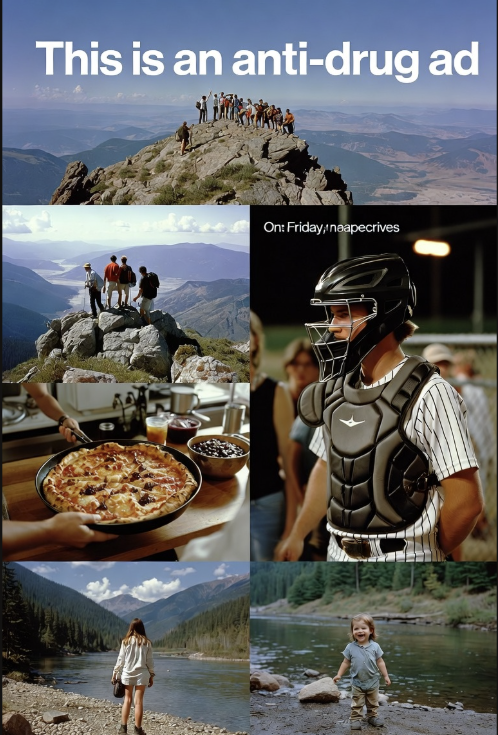
The story of why not to do drugs is already being told across Idaho. It isn’t told in a lecture or a warning label. It’s told every time someone summits a peak, sits down to a family meal, shows up for a game, or preserves the season’s last jars of huckleberry jam. The job of the “This Is An Anti-Drug Ad” campaign is simply to notice those moments and call them what they are.
Most anti-drug advertising is built on the opposite instinct. It shows the worst outcomes: the wreckage, the fear, the what-if. Idaho’s statewide campaign, created by Boise agency Drake Cooper and supported by a grant from the Idaho Millennium Fund, takes the other path. It never shows a drug, never uses a scare tactic, and rarely even says the word. Instead, it points at ordinary and extraordinary slices of Idaho life and places a simple label over them: “This is an anti-drug ad.” The message is quiet and direct. These good things are already happening. Protect them.
Consider a few of them.
A group of friends reaches the top of Borah Peak after a long climb. The air is thin, the view stretches for miles, and for a few minutes nobody needs to say anything. The achievement and the landscape do the talking.
On a Friday night under the lights, a high-school softball catcher settles into position while teammates chatter behind the fence. The game is ordinary. The fact that these kids are present, focused, and part of something larger is not.
Around a kitchen table, someone passes a pan of homemade pizza or a bowl of fresh huckleberry jam. The conversation is about nothing and everything. The meal itself is the point—unhurried, shared, and fully experienced.
A parent and a small child stand on a riverbank or a backyard, the child laughing at something only they understand. Or a teenager finishes an after-school activity and heads home with dirt on their shoes and a story to tell. These are not dramatic scenes. They are the texture of life here.
Each of these moments is an argument for staying clear. Drug use narrows what a person can fully feel, remember, or show up for. The campaign simply holds the moments up and lets them speak.
The numbers support the picture. According to recent data highlighted on antidrugad.com, 83 percent of Idahoans have not used illicit drugs in the past few years. Most people here are already living the version of Idaho the campaign celebrates. The remaining 17 percent is still too high—nearly one in five adults have tried something in recent years—and use limits the experiences the state is built on. Keeping the majority large is part of keeping Idaho special. The campaign’s phrasing is straightforward: we’ve got a good thing going, and we’d better steer clear of anything that would alter this marvelous reality.
That positive framing is the point. Traditional ads often try to frighten people away from a choice. This one reminds people what they already have and what they stand to lose by changing it. There is no spokesperson telling anyone what to do. There is only the moment, the label, and the quiet invitation to notice.
You don’t need a production crew to join in. The next time you post a photo of a trail, a game, a meal, or a simple afternoon, you can treat it as the anti-drug ad it already is. Share the view from the ridge. Show the jam cooling on the counter. Capture the kid who can’t stop laughing. Call it what you see: Idaho’s best moments are drug-free.
The full campaign, along with resources and the underlying stats, lives at antidrugad.com. The story is already being told in homes and on mountainsides across the state. All that’s left is to bring a little more attention to it—and to keep Idaho special.
More posts
83% of Idahoans Don’t Use Drugs
Most people in Idaho are already living drug-free. Recent data shows that 83 percent of Idahoans have not used illicit drugs in…
Read moreThe Story Behind the Red Ribbon
Every October, students across the country celebrate Red Ribbon Week. Schools hold special activities, students dress up for theme days, and communities…
Read more
What Parents and Communities Need to Know about the Federal Hemp Law Changes
New federal restrictions on hemp-derived THC products are approaching, raising important questions about product safety, youth access, and the changing cannabis market.…
Read more